 how-to
Credit Score Requirements for California Homebuyer Assistance
Table of Contents
- Credit Score Requirements for California Homebuyer Assistance: What Buyers Need to Know
- CalHFA Credit Score Requirements and Program Eligibility
- California First-Time Homebuyer Assistance Eligibility Beyond Your Credit Score
- Minimum Credit Score for an FHA Loan in California and Other Loan Types
- Program Minimums vs. Lender Requirements: Why the Two Numbers Differ
- How to Improve Credit Before Buying a Home in Merced County
- What to Do If Your Credit Score Falls Below a Program's Minimum
- Conclusion
- Frequently Asked Questions
Last Updated: October 19, 2026
Credit Score Requirements for California Homebuyer Assistance: What Buyers Need to Know
Your credit score is often the first hurdle between you and a California homebuyer assistance program. The good news: most programs don't demand perfect credit. The bad news: the number that actually matters may be higher than the program's published minimum.
This guide breaks down the credit score requirements for California homebuyer assistance, compares the major programs side by side, and explains why your lender's number can differ from the program's number.
Here's what most guides get wrong: they quote a program minimum and stop there. In practice, your lender adds its own rules on top. Below, we'll show you exactly how to check both numbers before you apply.
CalHFA Credit Score Requirements and Program Eligibility
California's state housing agency, CalHFA, sets credit floors that vary by loan type and program. Unlike a single national standard, CalHFA's requirements are layered: the agency publishes a minimum, but participating lenders often apply stricter overlays. Understanding both numbers is essential before you apply.
Here's what CalHFA currently requires for its main first-mortgage programs:
- CalHFA Conventional (Fannie Mae HFA Preferred) - Generally requires a minimum FICO score of 660. This program is for first-time homebuyers and offers down payment assistance.
- CalHFA FHA - Follows FHA guidelines but adds its own layer: typically a 640 minimum FICO, though some lenders may require 660 or higher.
- CalHFA VA - No CalHFA-specific credit floor beyond VA's lender-set requirements, but participating lenders often require 620-640.
- CalHFA USDA - Similar to VA; lender overlays usually set the effective minimum around 640.
These numbers are not universal. CalHFA's program bulletins and lender guides are updated periodically, and the agency explicitly defers to lender overlays for credit underwriting. That means a CalHFA-approved lender can require a higher score than the program minimum, and many do.
Eligibility doesn't stop at credit. CalHFA also checks:
- Household income against county limits (varies by county and household size)
- Purchase price against program caps (e.g., $657,000 for most counties in 2025, with higher limits in high-cost areas)
- First-time homebuyer status for most programs (defined as no ownership in the past three years)
- Completion of homebuyer education and counseling from a HUD-approved agency
- A debt-to-income ratio your lender can underwrite (typically 45-50% maximum, though CalHFA may allow higher with compensating factors)
A common mistake is assuming the program minimum is the number that matters. In practice, your lender's overlay is the gatekeeper. Always confirm current thresholds directly with CalHFA's official program pages and ask each lender for its written overlays before you apply.
California First-Time Homebuyer Assistance Eligibility Beyond Your Credit Score
Credit is only one piece of the puzzle. California first-time homebuyer assistance eligibility usually hinges on income, purchase price, and occupancy rules just as much as your FICO score.
A "first-time homebuyer" definition here is broader than it sounds. It typically covers someone who hasn't owned a home in the past three years. Some programs also reserve funds for first-generation buyers.
Watch these requirements closely:
- Income must fall under the area median income limit for your county
- The home must be your primary residence, owner-occupied
- Purchase price must stay under program caps
- You'll need a counseling certificate from a approved agency
Miss any one of these and the program won't fund, no matter how strong your credit is.
Minimum Credit Score for an FHA Loan in California and Other Loan Types
The minimum credit score for an FHA loan in California is generally 500 with a 10% down payment, or 580 for the 3.5% down payment option. But that federal floor is rarely the number that matters when you're pairing an FHA loan with California homebuyer assistance. Most down payment assistance programs and participating lenders set their own credit minimums above the FHA floor, often 620 or 640.
Here's how loan types compare when you're using them with California assistance programs:
| Loan Type | Federal/Agency Floor | Typical Lender Overlay | Common Assistance Program Minimum |
|---|---|---|---|
| FHA | 500 (10% down) / 580 (3.5% down) | 620-640 | 620-640 (varies by program) |
| Conventional | 620 (Fannie/Freddie) | 640-660 | 660 (CalHFA Conventional) |
| VA | No VA minimum; lender-set | 620-640 | 620-640 (varies) |
| USDA | No USDA minimum; lender-set | 620-640 | 640 (common) |
Why the assistance program minimum matters more than the loan minimum: When you use down payment assistance, the assistance provider (CalHFA, GSFA, or a local program) sets its own credit requirement. That requirement often exceeds the loan's federal floor. For example, you might qualify for an FHA loan at 580, but the down payment assistance program you need requires 640. In that case, 640 is your real target.
How credit-score thresholds vary by income and loan type: Some programs tier their credit requirements by income. Borrowers at or below 80% of area median income (AMI) may face a lower credit floor than those above 80% AMI. Similarly, conventional loans paired with assistance often carry higher credit floors than government-backed loans because conventional investors impose stricter overlays. A common pattern is: FHA + assistance = 620-640; Conventional + assistance = 660-680. Always ask the program administrator which credit score applies to your income tier and loan type.
What if you're below the minimum? If your score falls below the program's requirement, don't assume you're out. Options include:
- Asking about alternative loan types (FHA vs. conventional) that may have lower program minimums
- Working with a lender that offers credit counseling or a rapid rescore process
- Adding a creditworthy co-borrower (note: lenders typically use the lower mid-score of all borrowers, so a co-borrower with strong credit can help, but only if their score is also above the minimum)
- Delaying your application by 3-6 months to improve your score
Credit score source and timing: Lenders typically pull your credit at pre-approval and again before closing. They use your middle score from the three major bureaus (Equifax, Experian, TransUnion). If you have multiple borrowers, the lender uses the lower of the borrowers' middle scores. This means one borrower's low score can sink the file even if the other has excellent credit. Check all three reports before applying and address discrepancies early.
Program Minimums vs. Lender Requirements: Why the Two Numbers Differ
Here's the part that trips people up. A program's published minimum is a floor, not a promise. Your lender layers its own credit and underwriting rules on top.
A common mistake is assuming the program number is the number. In practice, the lender's number wins.
Why the gap exists:
- Lenders sell loans to investors who set their own credit rules
- Mortgage insurance companies add requirements for low-down-payment loans
- Overlays protect lenders from buyback risk
So a program might allow a 620, while your lender demands 640. Ask each lender for its overlays in writing before you get attached to a program.
How to Improve Credit Before Buying a Home in Merced County
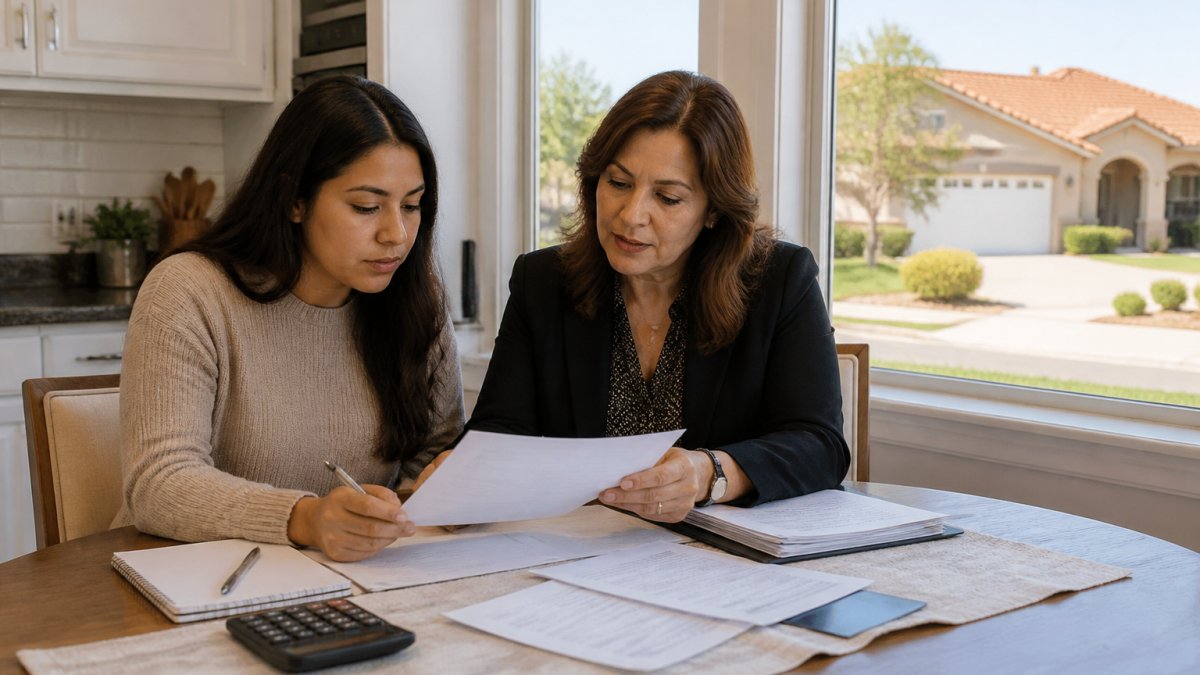
Improving credit before you apply is the highest-use move you can make. A modest score bump can widen your program options and lower your rate.
Start with these steps:
- Pull your credit reports and dispute any errors
- Pay down revolving balances below 30% of your limits (How do I get and keep a good credit score?)
- Avoid opening new accounts during the process
- Keep old accounts open to preserve credit history
- Set up automatic payments to protect your payment record
Give yourself a few months. Rapid fixes rarely work, but steady habits do. Buyers in Merced County often qualify for more programs after a short, focused cleanup.
What to Do If Your Credit Score Falls Below a Program's Minimum
A score below the minimum isn't the end. It's a signal to change your approach, not abandon the goal.
Your options:
- Ask about programs with lower credit floors
- Add a creditworthy co-borrower to strengthen the file
- Work with a lender that offers credit counseling and repair guidance
- Delay the purchase a few months and rebuild
- Explore down payment assistance paired with a more flexible loan type
The key is distinguishing program minimums from lender requirements. Sometimes a different participating lender opens a door the first one closed. Talk to a HUD-approved counselor for a free, unbiased read on your situation.
Conclusion
The gap between a program's published minimum and your lender's real requirement is where most California buyers get stuck. Knowing both numbers before you apply changes everything.
Lofty helps Merced County buyers match their credit profile to the right program and avoid dead-end applications. We guide you through eligibility checks, connect you with participating lenders, and keep the process grounded in your real numbers. Get started with Lofty and buy your Central Valley home with a clear plan.
Frequently Asked Questions
What credit score do you need for California homebuyer assistance?
It depends on the program and the loan type. CalHFA's first mortgages generally require a 640 FICO score for conventional and FHA options, though some programs allow lower scores with additional requirements. GSFA and other statewide programs set their own thresholds, often in the 620 to 640 range. Your participating lender may also apply overlays above the program minimum, so confirm the exact number with the lender before you apply. A 620 score can still qualify for some assistance, but not all.
Can I get down payment assistance in California with a 620 credit score?
Sometimes. A 620 FICO score meets the minimum for several FHA-backed assistance programs and some GSFA options, but CalHFA's conventional programs typically require 640 or higher. A 620 score may also trigger higher mortgage insurance or a larger required down payment. The practical step is to ask a participating lender which specific programs accept a 620 and what compensating factors, such as a low debt-to-income ratio or documented reserves, they will weigh.
Does applying for down payment assistance affect mortgage approval?
Applying for assistance does not automatically hurt your mortgage approval, but the timing of credit inquiries matters. Multiple mortgage-related inquiries within a short window are usually treated as a single inquiry by scoring models, so shopping lenders in a focused period is safer than spreading applications over months. The bigger risk is a new inquiry or account appearing during underwriting. Avoid opening new credit lines or financing furniture until after closing, because a changed credit report can delay or derail loan approval.
What should I do if my credit score is below a program's minimum?
Start by pulling your credit reports and disputing any errors, since corrections can raise a score within weeks. Pay down revolving balances to lower your credit utilization, and avoid closing old accounts that lengthen your credit history. Ask a HUD-approved counselor about homebuyer education, which some programs require anyway. If your score is close to the threshold, a co-borrower with stronger credit may help you qualify. If it is far below, spend a few months improving your credit before applying rather than risking a denial.